
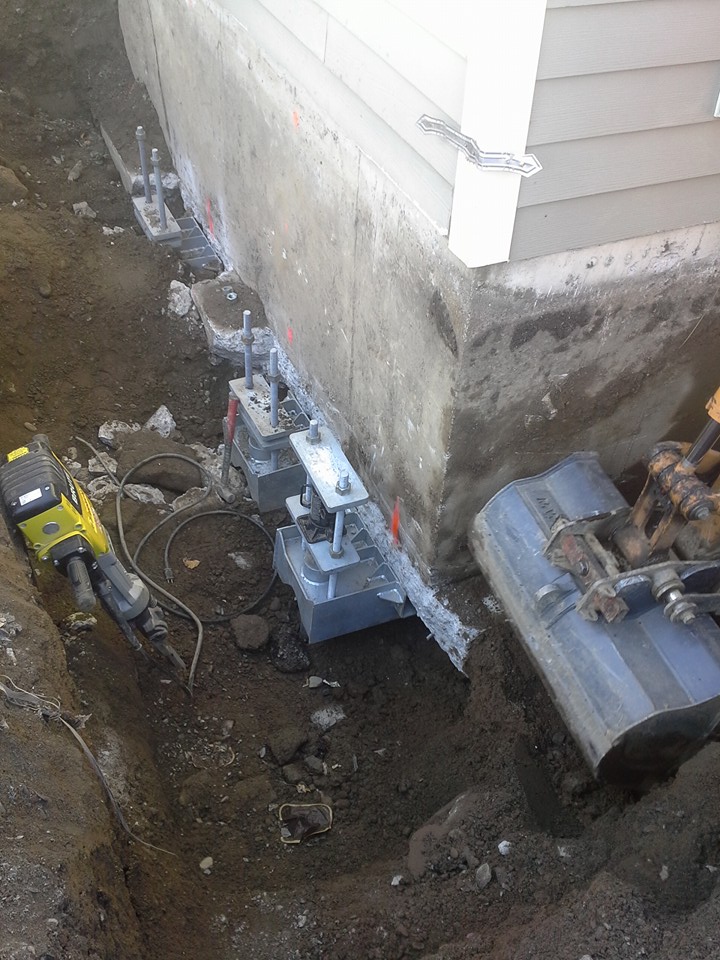
Subsidence is one of those words that makes homeowners nervous, and honestly, it should. A crack above a door frame, a window that suddenly won’t sit flush, or a garden wall that’s started leaning ever so slightly, none of it feels good to spot. We had a customer in Oldham last year who’d been ignoring a hairline crack for the best part of two years before she called us, and by then it had opened up enough that you could fit a five pence coin in it. If you own a property in Wigan, Warrington, Oldham, or anywhere else across the North West, it’s worth knowing there are two very different ways of fixing this now, and the older method isn’t automatically the best one anymore.
The Traditional Route: Underpinning
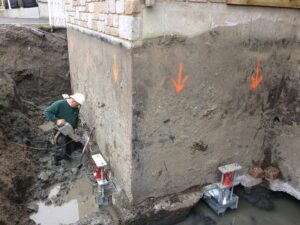
Underpinning has been the standard fix for foundation problems for a long time. It involves excavating sections beneath the existing foundation in stages, then filling those sections with concrete to extend the foundation deeper and give it more support. It works, and for certain properties, particularly older buildings with specific structural issues, it’s still the right call.
The downsides are hard to ignore though, and most homeowners don’t find out about them until they’re halfway through the job. Traditional underpinning means digging in stages around the perimeter of a house, which takes time, generates a fair bit of spoil that needs carting away, and can leave a garden looking like a building site for weeks on end. It’s also at the mercy of the weather, since concrete needs the right conditions to cure properly. Anyone who’s had underpinning done during a rainy October will tell you the delays add up fast.
The Newer Option: Helical Screw Piles
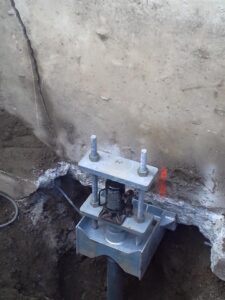
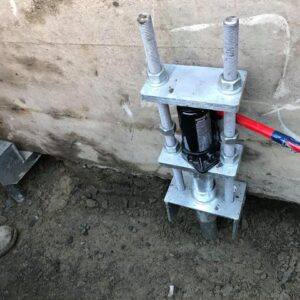
Screw piles work on a completely different principle. Instead of excavating and pouring concrete, a helical pile is screwed directly into the ground beneath the affected foundation until it reaches load bearing soil. The pile is then connected to the existing house foundation using a bracket system, transferring the weight of the structure onto stable ground.
The practical differences are significant. There’s far less excavation, which means less mess and less disruption for anyone living in the property during the work. There’s no concrete curing time, so the job can often be completed in days rather than weeks. And because the equipment used is compact, it can access tight spaces around a property that would be difficult for traditional underpinning machinery to reach.
For homeowners in Wigan or Warrington dealing with a semi detached property on a shared plot, or in Oldham where many streets have limited side access, that difference in equipment size alone can be the deciding factor.
Which One Is Right for You?
Neither method is universally better. The right choice depends on things like:
- The cause of the movement, whether it’s subsidence from clay shrinkage, tree root interference, or a structural issue with the original build
- How deep stable ground actually sits beneath the property
- Access around the building for equipment
- How quickly the work needs to happen, particularly if the issue is worsening
This is exactly why a proper structural assessment matters before agreeing to any foundation repair. A reputable contractor should be able to explain, in plain terms, why they’re recommending one method over the other for your specific property, rather than defaulting to whichever job pays them the most.
Conclusion
Foundation movement rarely fixes itself, and small cracks left unaddressed tend to get bigger and more expensive to fix. If you’re seeing warning signs in a property anywhere across Wigan, Warrington, Oldham, St Helens or the surrounding areas, it’s worth getting a proper assessment sooner rather than later.
GoliathTech Manchester carries out helical screw pile installations for foundation repair and underpinning across the North West, with a full structural assessment before any work begins. Call us on +44 161 66 00 445 or reach out through our website today, and we’ll give you an honest, no obligation opinion on what your property actually needs before the problem gets worse.