
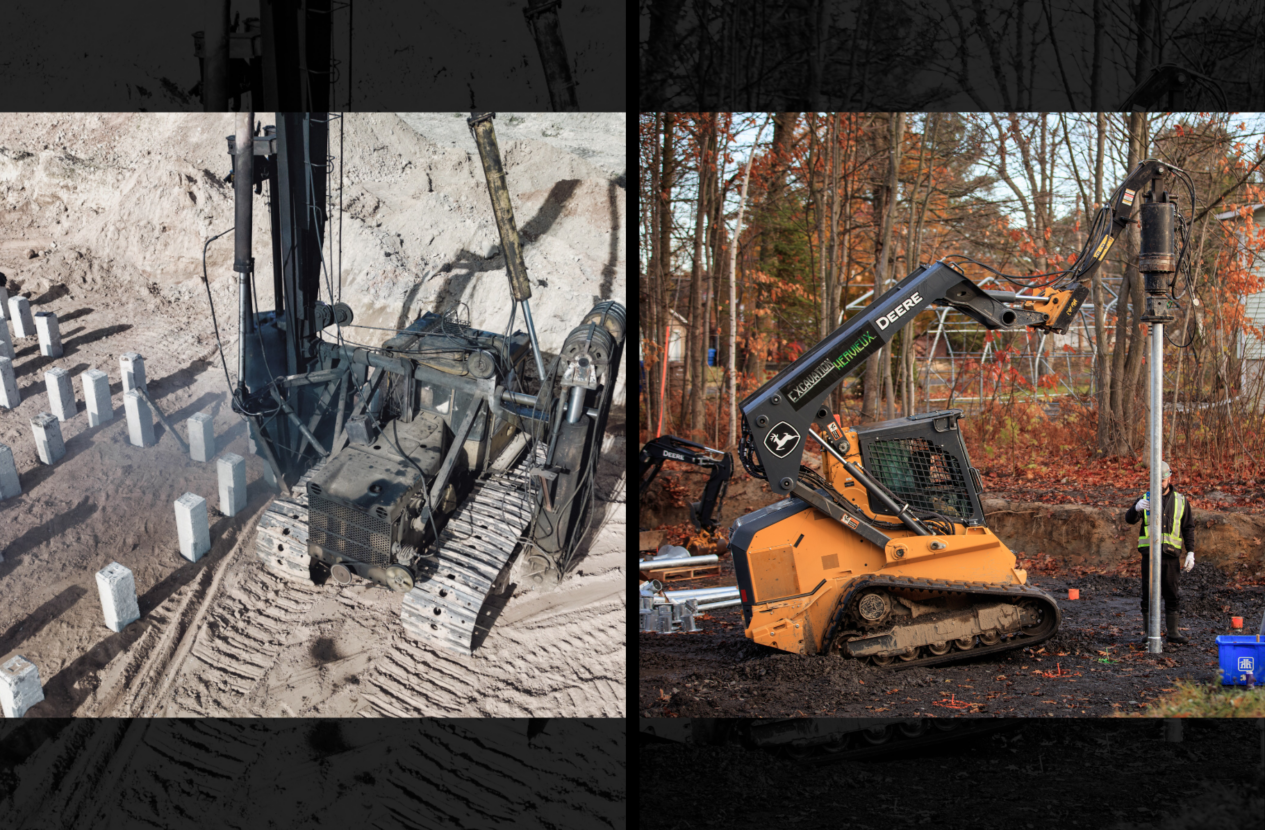
Introduction to Foundation Options
When it comes to constructing a stable and durable foundation, choosing the right type of pile is crucial. Two popular options are **screw piles** and **driven piles**. Both have their advantages and disadvantages, and the right choice depends on various factors, including soil conditions, project requirements, and environmental considerations.
Screw Piles: A Comprehensive Overview
- **Installation Process**: Screw piles are installed by screwing them into the ground using a rotary motion. This process causes minimal soil disturbance and is suitable for various soil types.
- **Benefits**:
– **Minimal Site Disruption**: Ideal for sites with limited access or sensitive environments.
– **Rapid Installation**: Faster installation compared to driven piles.
– **Versatility**: Suitable for a wide range of soil conditions.
– **Sustainability**: Lower environmental impact due to reduced soil disturbance and no need for concrete.
Driven Piles: A Comprehensive Overview
- **Installation Process**: Driven piles are installed by driving them into the ground using a heavy hammer or vibrating machine. This process can be more disruptive to the soil and surrounding structures.
- **Benefits**:
– **High Load-Bearing Capacity**: Driven piles can achieve high load-bearing capacities, making them suitable for large-scale projects.
– **Durability**: They offer long-term durability and can withstand harsh environmental conditions.
Key Differences
| Criteria | Screw Piles | Driven Piles |
|---|---|---|
| Installation Method | Screwed into the ground | Driven into the ground |
| Soil Disturbance | Minimal | Significant |
| Installation Speed | Faster | Slower |
| Environmental Impact | Lower | Higher |
| Load-Bearing Capacity | Suitable for most applications | High load-bearing capacity |
Choosing the Right Option
– **Screw Piles**: Ideal for projects requiring minimal site disruption, rapid installation, and sustainability. Suitable for residential, commercial, and infrastructure projects.
– **Driven Piles**: Best for large-scale projects requiring high load-bearing capacities and long-term durability.
Conclusion
Both screw piles and driven piles have their unique advantages and are suited for different applications. Understanding the specific needs of your project and the characteristics of each pile type will help you make an informed decision.
For a detailed comparison and to determine the best foundation solution for your project, visit the full article.