
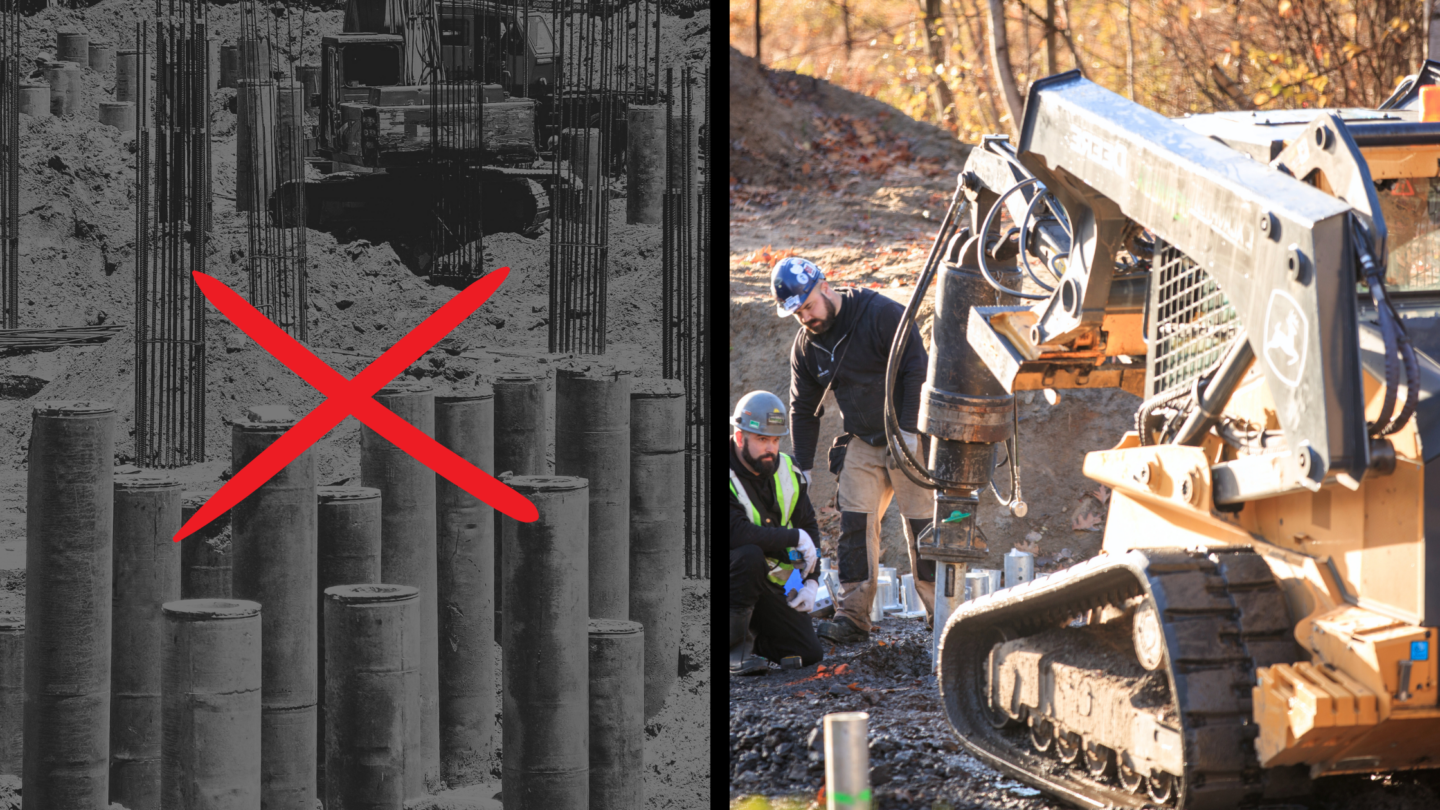
Concrete footings are essential for providing a stable base for any structure, but the drying process can be time-consuming and disruptive to construction schedules. This article delves into the drying time required for concrete footings and introduces helical screw piles as a faster, more sustainable alternative for foundation solutions.
Drying Time for Concrete Footings
The drying time for concrete footings is influenced by several factors, including environmental conditions, the specific concrete mix, and the thickness of the footing. Typically, concrete footings need **at least 24 to 48 hours** to achieve initial set, allowing for some weight to be placed on them. However, the full curing process, during which the concrete reaches its maximum strength, can take **up to 28 days**. This extended period can lead to significant delays in construction projects, especially in time-sensitive environments.
Faster Alternatives: Helical Screw Piles
For projects that require quicker turnaround times, helical screw piles offer a superior alternative to traditional concrete footings. These innovative foundations are designed to be screwed into the ground, providing immediate stability and support.
Key Advantages of Helical Screw Piles:
- **Instant Load-Bearing Capacity**: One of the most significant benefits of helical screw piles is their ability to bear loads immediately after installation. This feature allows construction to proceed without the delays associated with concrete curing.
- **Efficient Installation**: Helical screw piles can be installed quickly and with minimal equipment, reducing the overall time and labor required for ground works. This efficiency is particularly valuable in projects with tight deadlines.
- **Environmental Benefits**: By reducing the need for concrete and minimizing excavation, helical screw piles contribute to lower CO2 emissions and promote sustainability in construction. This aligns with modern environmental standards and regulations.
- **Cost Savings**: The reduced labor and material costs associated with helical screw piles make them a cost-effective solution. This economic advantage is crucial for projects aiming to optimize budgets without compromising on quality.
Applications of Helical Screw Piles
Helical screw piles are highly versatile and can be applied in a wide range of construction projects, including:
– **Residential Construction**: Perfect for building foundations, decks, and garages, providing a stable base with minimal disruption.
– **Commercial Buildings**: Suitable for modular structures, signage, and other commercial applications that require quick installation.
– **Infrastructure Projects**: Ideal for supporting bridges, wind turbines, and other large-scale constructions that demand immediate stability.
– **Agricultural Structures**: Used in greenhouses, silos, and other agricultural installations where quick setup is essential.
Conclusion
In summary, while concrete footings are a traditional choice for foundations, their extended drying time can be a significant drawback. Helical screw piles offer a faster, more sustainable, and cost-effective alternative. Their immediate load-bearing capacity, efficient installation, and environmental benefits make them an excellent choice for modern construction projects.
For more detailed information on the drying time of concrete footings and the advantages of helical screw piles, you can read the full article